
.png)
Dani Offline Wants You to Dance

On making music slowly, falling in love with everything, the internet as a playground, and learning to let your art go.

There is something quite apt about interviewing Dani Offline at 7:30 in the morning.
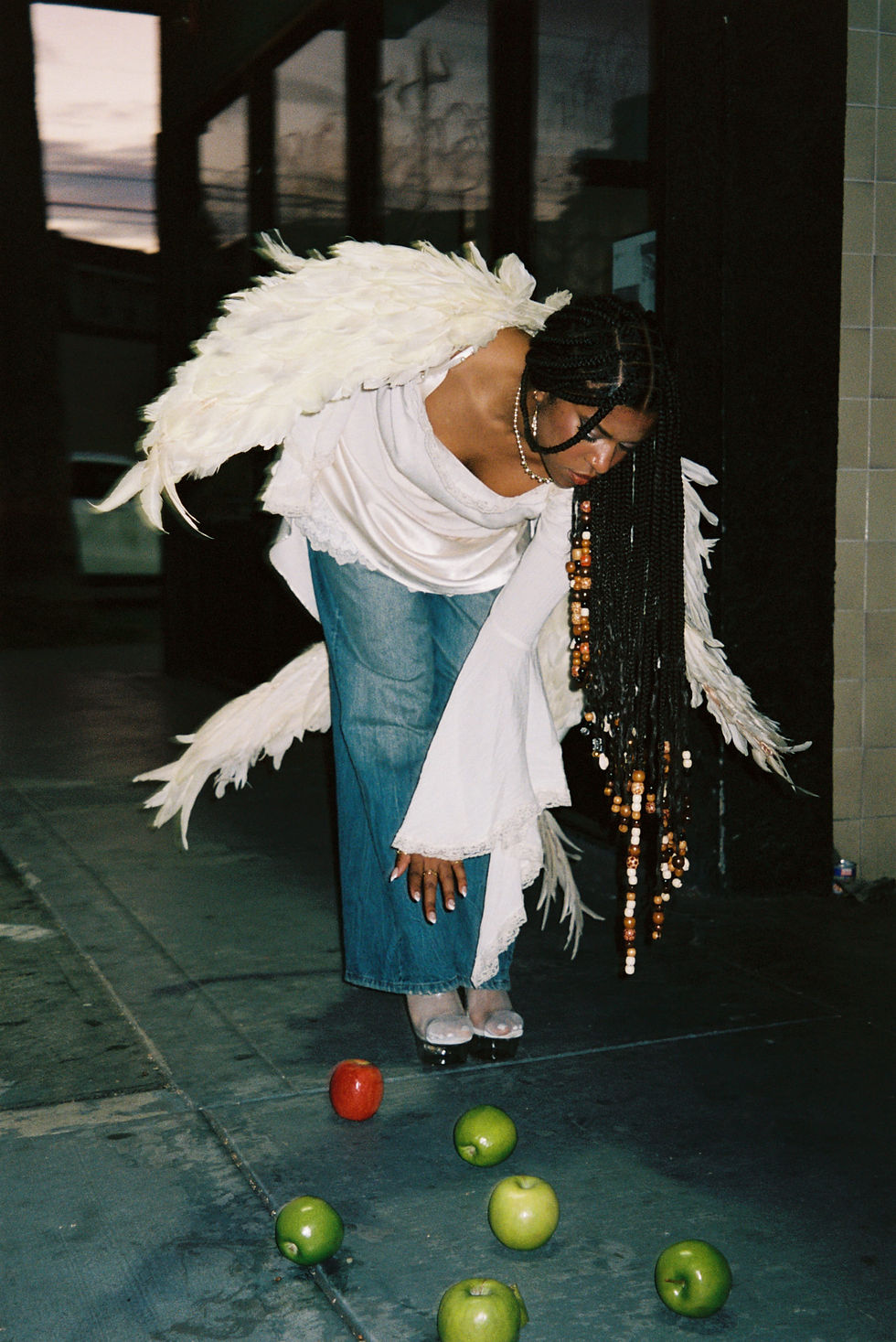
She is calling from Berkeley, where she is studying Comparative Literature, while I am somewhere in London trying to make sense of the time difference. Her day is just beginning; mine is winding down. It feels fitting for someone whose artistic life seems to exist in several places at once. There is Dani the songwriter and producer, Dani the poet, Dani the literature student, Dani the teacher, Dani the Substack writer, and then there is Dani Offline: the persona that somehow contains them all.
Her debut album, Lover’s Discourse, was days away from release when we spoke. The record takes its name from Roland Barthes' 1977 book A Lover's Discourse: Fragments, but its interest in love extends well beyond romantic relationships. Across twelve songs, Dani is interested in the language we inherit for desire and connection, and ultimately what happens when we try to make those feelings our own.
That same curiosity runs through offline soul, the Substack she began in 2025. Her writing moves between the internet, art in its entirety and the strange business of being alive. Her essay “everyone wants to be a DJ, no one wants to dance” became a viral meditation on what happens when everybody wants to make culture but nobody wants to participate in it. She followed it months later with “how to fall in love”, turning the question inward: if creating is an act of love, how do we learn to love creating again?
Reading Dani's writing before speaking to her, I expected our conversation to be thought-provoking. And rightly so. What I didn't expect was the familiarity in our exchange. Beyond the laughs, pensive pauses and the breakdown of her creative process, I was able to see an individual that leaves everything in their music. So much so, that she describes her songs as “living”.
By the end of our conversation, that willingness to express (in and outside of her music) might be the best way to understand Dani as a person.
Ope: I want to talk about the album straight off the bat. Lover’s Discourse is obviously named after Roland Barthes, but the album feels like it's about more than romantic love. It feels like it's about the ways we inherit language and ideas for how we're supposed to love, how we connect, how we relate to each other. When did you realise that making the album was essentially about those things?
Dani: I'm kind of always writing, and then I figure out what the project is afterwards… Like drawing the target around the arrow.
That's what happened with this album. Once I had a collection of songs that I'd written throughout my early twenties, I realised there was something in common between them. I'm a really big fan of A Lover's Discourse, so I realised maybe that idea had been sitting in my mind as I was navigating these relationships.
There were some songs I finished later, once I already knew what I wanted the album to be. At that point I was thinking about the theme a little more and trying to fill in the blanks in the story.
Ope: I like that idea of drawing the target around the arrow because it feels very close to how you talk about writing generally. You describe yourself as a poet first, and a lot of your process seems to start with words before music. Studying literature as well, has songwriting changed the way you understand literature?
Dani: Absolutely. I write about lyric poetry for my schoolwork a good bit, and it's easy for me to think of my songs as poems. But it's definitely made me start thinking of poems more as songs too.
That's actually part of the tradition of poetry. The first poets would sing their poems and accompany themselves with a lyre or drums. So songwriting has made me approach literature differently.
I think I'm also reading more actively now. I'll get excited when I feel inspired, or when I make a connection between something I'm reading and something I'm working on.
Ope: Are you reading anything at the moment?
Dani: Yes. I'm reading I Deliver Parcels in Beijing. It's a memoir about a delivery worker in Beijing, around the period before and during 2020. It's translated from Mandarin, and the prose is really spare. It's such an interesting insight into that life.
And I'm teaching a class at Berkeley called Black Surrealism, so I'm doing a lot of reading for that too.
Ope: Black Surrealism is crazy. What are you teaching them?
Dani: It's fun. It's a little trippy. In a couple of weeks we're going to watch Sorry to Bother You, which I think they'll like. I had them read Aimé Césaire's Notebook of a Return to the Native Land, and one of my students was like, “I'm so sorry. I love everything we've read so far, but anyone who says they like this is lying.”
I was like, girl, that's fair. You're entitled to your opinion. I didn't like it when I first read it either.
Ope: I feel like that's one of those things that grows on you with experience. Sometimes you need to live a little more before you understand what you're reading.
Dani: Yeah. They're young too. I mean, I'm young, whatever. But maybe you just have to live more life. Maybe I'll have a newfound appreciation for it as I get older.
I don't think my students know how old I am either. I think they think I'm older, which I'm very happy about.
Ope: When you're a student, you automatically assume your teacher is much older than you.
Dani: Exactly. I had one class where they wanted to guess my star sign and they clocked it immediately. I was like, that's crazy. They're reading me down.
Ope: You said you're a Cancer?
Dani: I'm a Cancer. I'm a secret Cancer.
Ope: Why a secret Cancer?
Dani: Because I'm a really big homebody. I'm a little bit of a recluse, lowkey. People don't know that because I make music, I do shows and I'm going on tour, so it's easy to think that's most of my life. Really, I spend most of my time at home.
Ope: But there's usually a persona that comes with making music. Can you actually be a homebody while doing all of this?
Dani: For me, yes. I have to be. That's how I make music.
I feel most comfortable at home. I love sitting at my piano at home, and that's where I do all my writing. When I first started making music, it was just in my dorm room or my bedroom, so I feel like I need that space.
I've tried writing on the road, but when I'm travelling I prefer using that time to listen back to things. On my last tour I was going over mixes for the album, and I really liked that. You have a lot of waiting time, you're exploring a city, you've got your headphones on. That was nice.

Ope: There feels like a deliberate slowness to your work. And I don't just mean the music. There's the analogue recording, the emphasis on physicality, the Quiet Storm influence, even the whole idea of being “offline”. Do you feel like you're trying to protect something in that slowness? And if you are, what are you protecting?
Dani: Yeah. I think music is really sacred to me. It's a gift from God, for real. So I always want to approach it with the mindset of appreciating the process.
The process is actually my favourite part of making music. Even now, the album is out and I've listened to it a million times. I don't know if I'll ever listen to it again, which is kind of sad.
Ope: You'll listen to it again.
Dani: I probably will. But I'm one of those people who feels like I have to let it go, to allow other people to experience it.
I think part of that slowness is just me being indulgent and wanting to enjoy the process for as long as I can. I also just like the way things sound when they're made slowly. I love recording things to tape.
But some of it probably comes from my experience too. I first started making music on my laptop, so I know how to make music quickly. I know how to make beats on my computer. That gives me an appreciation for working with other people, collaborating and actually sitting in the process… Taking our time and talking things through.
Ope: That brings me to your relationship with the internet, because I find that really interesting. There's this “Offline” identity, but it's not actually a rejection of the internet. You use Substack and social media, and clearly enjoy them. At the same time, you're critical of being constantly connected. What have you learned about being an artist online without letting the internet become the place where the art happens?
Dani: I actually have a really fun relationship with the internet, which I think surprises people because I try not to spend very much time on it.
I think that's why I have a fun relationship with it. I love posting. Social media is so wacky and weird and fun. It's like a theme park. You want to ride the rollercoaster a bunch of times, but you'll get sick if you do.
Part of the fun is it being ephemeral.
I try to be intentional about when and how I go online. I almost treat it like my computer time at the end of the day, like when I was in school. I was a big library kid. At 3:30 I'd walk from school to the public library and get on the computer. I'd play GirlsGoGames and watch early YouTube. It was something I looked forward to.
And I could only spend so much time there because it was a public library computer. Eventually I had to leave and do my homework.
I think I try to protect that relationship with the internet. I want to see it as something fun and expressive. Every time I post, it's like I'm doing graffiti, or arts and crafts, or scribbling something. I don't want to take it too seriously.
But there's another side to that, which is protecting my art. There are so many pressures to make art in a certain way or expose certain parts of yourself because it's more marketable.
I understand why people do it. It's just not for me. It makes me sad and it makes me feel lost. I'd rather make my music and live my life offline, and then post the fun stuff as another form of expression.
Ope: So, essentially, it's about being intentional with how you interact with being online.
Dani: Exactly.
Although people will comment on my stuff and be like, “Dani Offline, but this music video is online. Something doesn't add up.”
I'm like, bruh. Give me a break. I'll be your recluse. I'll be a hermit. You'll never hear from me again.
Ope: I really like how much of that seems to come from childhood. Your relationship with the internet isn't just a reaction to what social media has become; it sounds like you've always understood the internet as somewhere you visit rather than somewhere you live.
Dani: Yeah. I think that's probably true.
Ope: And that connects to offline soul, because the Substack feels like another creative practice rather than an extension of your music promotion. Has writing publicly changed the way you make music? Or has music changed the way you write?
Dani: Yes and no.
Before Substack, I was already writing essays. I wrote for school, I was a big Tumblr kid, so I've always loved blogging. A lot of the things I write on Substack are thoughts I would have talked about with friends or written down in my Notes app anyway.
So in that sense, it hasn't really changed my artistic process.
But it has been interesting because it puts eyes on my work in a way I wasn't expecting.
I wrote “everyone wants to be a DJ, no one wants to dance” and suddenly people were talking about it on Twitter. I was like, what is happening?
Ope: That essay felt like such a good example of your whole philosophy. It's ostensibly about nightlife and being an artist, but it becomes this much bigger question about participation, why everybody wants to be the person making culture but fewer people want to simply experience it.
Dani: Yeah. And the response that really changed the way I thought about it was someone commenting, basically, “If everyone wants to be a DJ and no one wants to dance, how can I dance more?”
That question really moved me.
Because I think I was asking myself the same thing. How do I participate more? How do I get back to the part of making things that I actually love?
That essay was partly me trying to understand why I felt so disconnected from creating, even though creating is supposed to be the thing I love.
Ope: And then you wrote “how to fall in love”, which felt like the answer to that question.
Dani: In a way, yeah.
I think it all boils down to falling in love. If you want to dance, create, love, learn, exist more… You have to love it. You have to keep falling in love over and over again.
And I don't mean just falling in love with one person. I think we should fall in love as much as we can. With a book, with time, with grief, with loneliness, with anything that makes life feel free and profound and meaningful.
Ope: That's interesting because Lover's Discourse also feels like it's asking what it means to love when so much of our understanding of love is inherited.
Dani: I think being a lover is a way of moving through the world.
I like the vulnerability of it. I like the release of ego and the surrender to desire. It's powerful. And I think there's something really beautiful about allowing yourself to be affected by things.
Ope: There's also this idea in your work that things should be allowed to change. You talk about music almost like it's alive. How does a song actually grow?
Dani: It's a combination of other people laying their hands on it, other musicians playing it live, changing arrangements, and me changing.

I'm always MDing my own shows, so I'll use that as an opportunity to write too. I'll tell my band, “You want to try something today?” and they're always down.
And then there's me changing as a person. When I wrote juno, I was a different person. My relationship looked completely different. So the song acquires new meaning.
I really like the version on the album because it's a song I wrote at the beginning of a relationship that lasted years. Then I recorded it when I was on the other side of something.
Sometimes I'll write lyrics from my subconscious and record them years later and think, “Whoa. That's actually deeper than I thought it was when I wrote it.”
It's almost like I'm reading a poem and explicating it for school. I'm like, I didn't come up with that. I don't know. There's a metaphor here that I didn't anticipate or contrive, but it exists now.
And sometimes people interpret a song in a way that surprises me. Then every time I perform it, I think about that interpretation.
That's how it changes. Other people change it, and I'm one of those people too.
Ope: Your first project, Mirror, was written, produced and performed by you, and it came out of such a different period of your life. When you listen back now, what does that version of Dani understand about herself that you don't anymore?
Dani: She understood less and was more okay with it.
I was just like, “I have to make this. I'm new to this, but I'm going to try my best and see what happens.”
I wrote some of those songs when I was 19 or 20. I didn't know what I didn't know. I was like, I know enough. Let's just go.
Now I feel more like a student than I did then. I feel like there's so much I don't know and so much I want to learn. If I'm going to write another project, make more music and perform more, I want to keep learning.
I'd honestly love to ask that younger version of myself where she got that bravery from. How did she do that alone in her bedroom?
It seemed so lonely, but I remember having so much fun. It felt like when you're smoking weed for the first time in high school and you're all huddled in a circle.
Ope: That's perfect.
Dani: And now I'm more serious. Maybe too serious.
Ope: You've said that you want your music to feel as though somehow you knew the listener, that someone can hear a song and feel like you wrote it specifically about them. Where does that desire for intimacy come from?
Dani: I spent a lot of time alone as a child.
And I moved around a lot, so maybe I'm just desperate for connection.
I've always been someone with a really rich inner world. I love listening to an album and feeling like I'm there. That's one of my favourite feelings.
Like listening to Broken Clocks by SZA and feeling like I'm on the job with her. I'm doing an extra shift at the strip club. I'm there.
That's always been one of my favourite things about music. You want to listen to an album over and over because you become somebody else. You transform. Then you learn something new about yourself.
So maybe that's what I want as an artist: to share that feeling with other people.
When people sing along to weary soul, I'm like, oh, you felt bad too. You were right there with me.
It makes me feel alive. It makes me feel real.
Maybe it's partly a selfish desire for connection, and then partly something sublime and spiritual. That feeling of, wow, we're all humans together experiencing something.
Ope: I love the example. Because I immediately knew exactly what you meant.
Dani: You know what I mean!
Ope: Like, what business do I have running between my day jobs and then back to the strip club? But I'm right there with her.
Dani: Exactly!


Comments