
.png)
Abantu Is and Will Always Be for the People
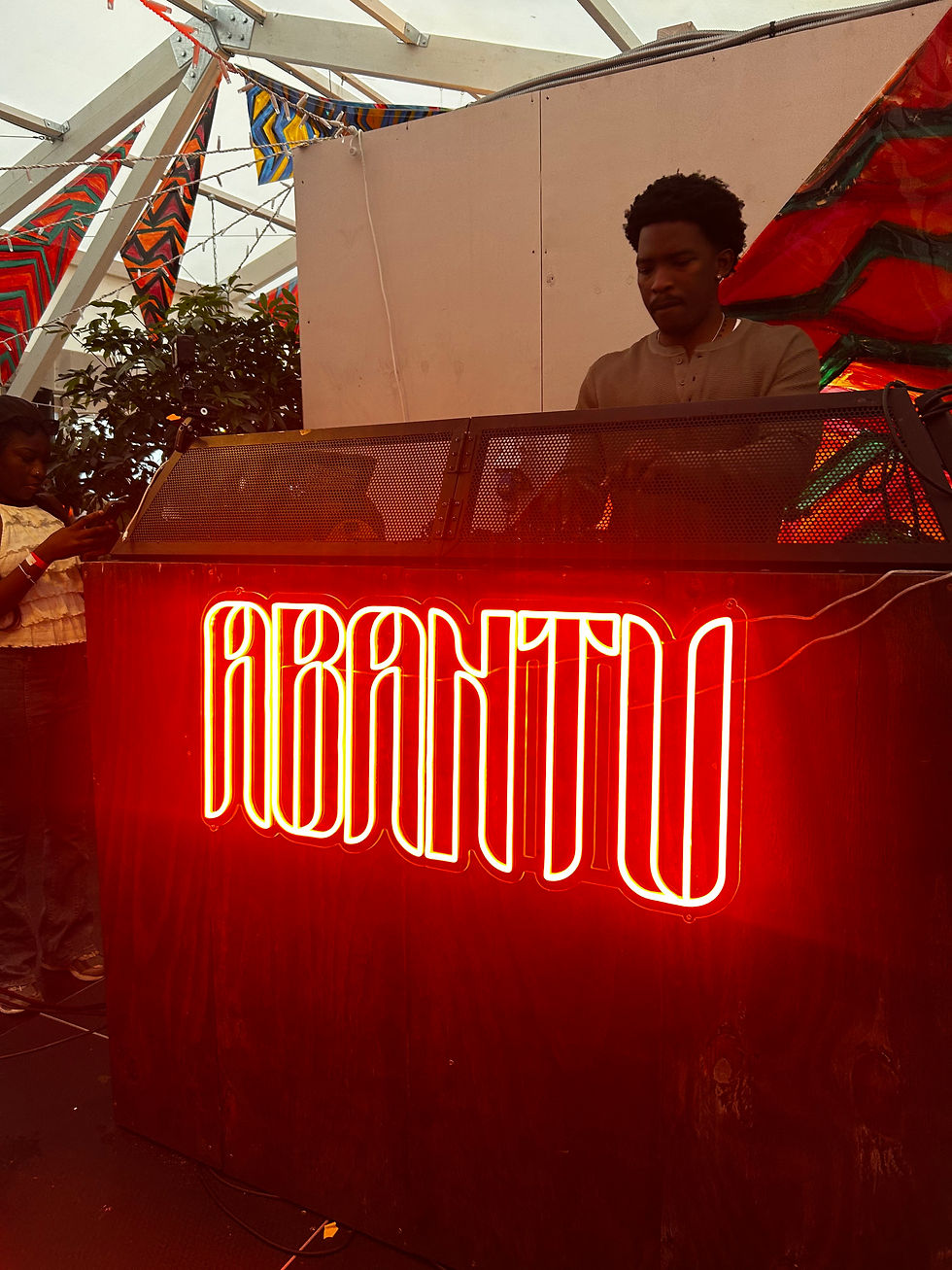
In a digital age, after the distance and separation that COVID caused (that we are still feeling the repercussions of), how do we seek community? What does that look like? Can you find and preserve community in the club? Many people say it’s not possible to breed genuine community this way, but with the scarcity of genuine third spaces in the city, the club has become that - in one way or another. Though it may not be everyone’s idea of an evening well spent, the club does give us the opportunity to socialise, gain new friendships and share the experience of enjoying music amongst likeminded people.
On Sunday 10th, Abantu collaborated with the home of popular South African event ‘Stokvel’a’ Join The Community to host an event that celebrated the sounds and soul of the South African Diaspora at Somerset House’s new-ish party venue Setlist, and I was invited to experience the vibe myself. I was looking forward to this day as someone who has never attended Abantu but can see amongst the community the impact that they’ve had in the party scene for the years that they have been operating.
Because I’m a frequent party goer as well as someone who works in nightlife, I’ve convinced myself that I know almost every DJ and how every party is going to go, which has made me complacent when it comes to seeking new spaces to dance. Nowadays, it excites me to see a line up of DJs that I’m not familiar with. Prior to the night, I was only aware of one of the 7 DJs K3; having seen him as part of the opening line up for Felo Le Tee last month. As someone who is West African and wasn’t exposed to Southern African sounds until later on in my adulthood, I love an opportunity to be educated on the music and a chance to absorb a wider variety of styles from different selectors (also, I know that my Shazam will be tired of me by the end of the night).
The first thing I noticed when I arrived was how intimate the general atmosphere was. Despite the fact that people were dispersed around the venue, there was a sense of warmth that embraced me as soon as I stepped through the door. This is very contradictory to the energy at many London parties where people become ‘wall huggers’ and have faces that look like someone forced them to buy a ticket under duress.
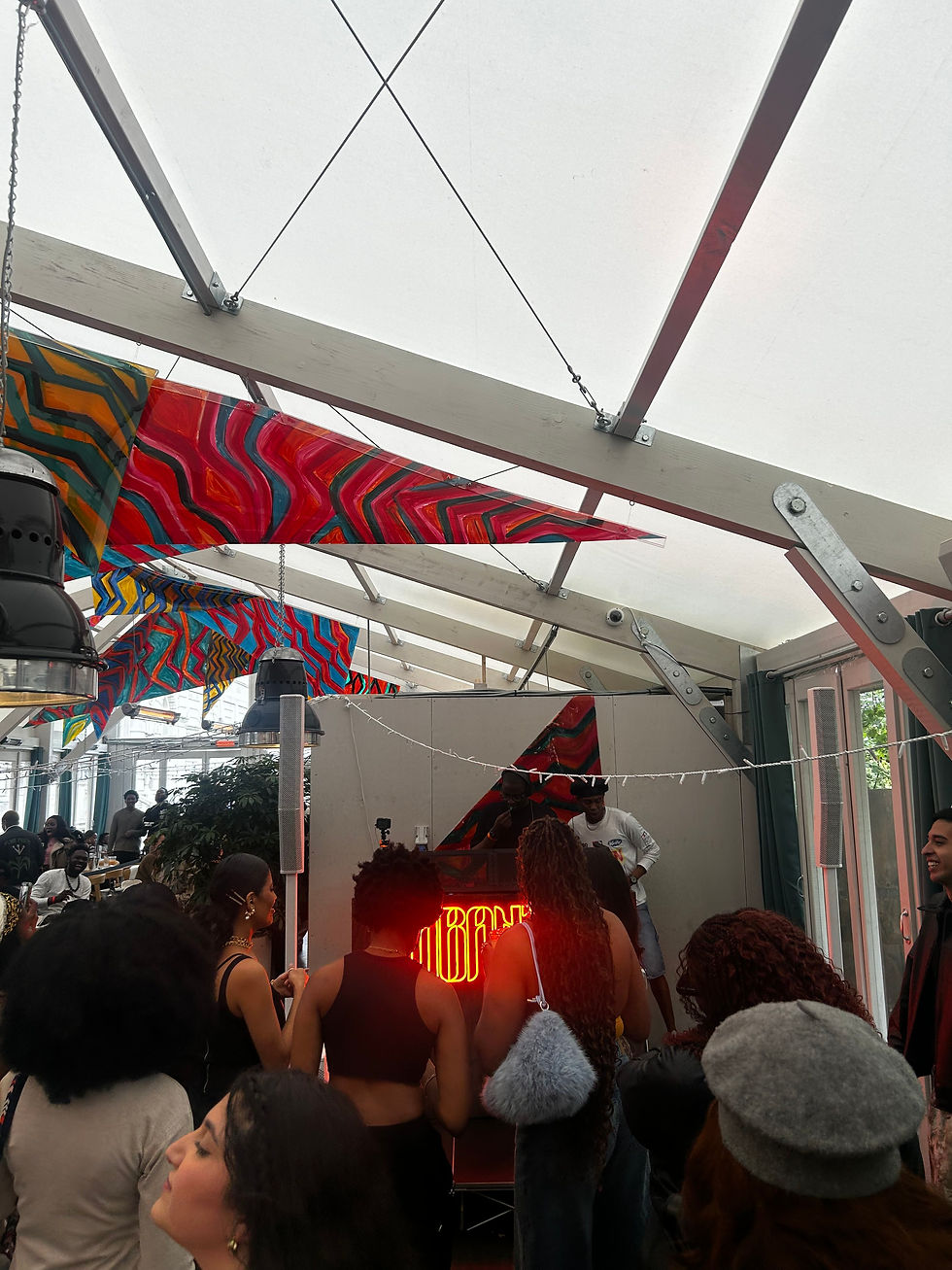
Another standout element was the fact that the audience was very mixed. This was an intergenerational event with no clear demographic besides groove lovers. As you’re reading this, I’m sure you can recall at least 3 events that whether you have gone or not, there is a clear age range of the people who attend. It’s rarely by the construction of the event organisers, but usually informed by the genres of music played and the people who are playing them. This can often deter people from even giving events a try, because they’re worried that they may be “too old” (whatever that means!) to go and enjoy themselves. Many of us are afraid of being too visible against the status quo of the space that we’re within at the time. This alone shows that dance is and should be a collective and discrimination-free practice.
At the time of my arrival, I was met with DJ M’Jaivane closing out on the decks. As it was still light and early on in the evening (the event started at 2pm but you know what they say…), he gave us the perfect soundtrack to the start of golden hour with the slightly slower and bouncier tempos that private school piano produces.
Not long after, multi-genre DJ Khanda Cool graced the stage, his specialties being Afrobeats as well as South African House. He opened with a song I was unfamiliar with, that had the crowd screaming in excitement and doing the electric slide, also known as the ‘Candy Dance’ to some. When I’m in the dance and everyone is excited by a song that I don’t know, I get FOMO. But, my handy tool Shazam was able to find the song, which was ‘Thathisgubhu’ by Uhuru and Bongo Maffin originally released in 1998. Despite the age of the song, it is clearly timeless, and everyone’s reactions to hearing it perfectly displayed that.
This set really intrigued me, as I found myself hearing music that had similar pace and energy adjacent to Afrobeats and Ghanaian Highlife. After some digging, I learnt that this is a genre originally from Soweto called Kwaito, one that blends the sounds of afropop, hip-hop and reggae, which explains the connection I drew between the genres above that I listed. It was clear that this was an old school South African set, that had a lot of the originals of songs that are sampled in popular contemporary Amapiano. In all South African events that I’ve been to (and I’ve been to many) I don’t think I’ve ever heard this approach to the country's sound.

Whilst taking a minute to catch my breath after all my dancing, observing all the joy and movement amongst the attendees really felt like I’ve been transported to the southern hemisphere of Africa, deep into the real groove that expands beyond all the Afro electronic sounds that it’s attached to today. This was an impeccable embodiment of “for us, by us”, as well as exhibiting the breadth of the music that that region of the world has to offer.
Certain songs were met with a reception of whistling and ululating, which is the sound that is produced when rapidly moving the tongue and uvula back and forth while vocalising. This can frequently be heard during worship, celebrations and even as a historical sign of resistance. In this case, it was an expression of joy and happiness amongst those in the middle of the dancefloor.
As someone who spent the festive holidays of last year in Johannesburg and Cape Town, the spirit of the evening at Setlist felt akin to the spirit of the REAL groove as if we were transported to Soweto. The cherry on the cake for me was food vendor Skhaftin Kitchen serving authentic South African food with an extensive menu that wouldn’t have made you think that we were in Central London. It’s rare to find caterers that serve ‘7 colours’; referring to a popular dish often consisting of meat, rice, beetroot salad, greens, butternut squash, potato salad and chakalaka (a spiced relish). The name of the dish alludes to the rainbow-esque nature of the plate once you look at everything together. Aligning the catering with the essence of the event and the music it’s playing was a wonderfully intentional touch.
After my food break, it was K3 next up, juggling between the heavy hitting ‘piano and taking us on a journey through 3-step as the sun began to set over Waterloo Bridge. This is where the energy was starting to pick up for the real steppers and groovers.
London-based Zimbabwean DJ Teekz was assigned the final set of the evening, channeling a similar sound to his predecessor. Claiming Amapiano and Gqom as his specialties it was only right that off the bat we were met with Gqom, opening his set by playing popular song ‘Asisho Sonke’ by Blacks Jnr, Dankie Boy, Goldmax featuring CAPTAIN, Woza Bakzin & Bhuwa. As if it was even possible at this point, everyone’s energy was sky high, the whole room was moving in a beautiful unison. It was nearing the end of the event, and quite frankly I didn’t want to go home. If I didn’t have work the next morning, I definitely would have been one of the stragglers outside the venue once the lights were up ululating to the stars wishing the party could go on.
With the rising popularity of the electronic sounds of South Africa and its neighbouring countries, it’s a bit harder to distinguish the genuineness of the events that are surfacing. It’s clear both Join the Community and Abantu have a passion for community, movement and music with authenticity at the centre of it all.
Speaking to the architect of Abantu and DJ Charisse C herself, she said she wants to “make sure to have a perfect blend of traditional music and the more contemporary sounds that larger crowds are aware of.” - I would definitely say that her aim has been achieved. The meaning of ‘Abantu’ in many Nguni languages of Southern Africa translates to “people”. The people are at the core of the ethos, all you need to do is experience one of her events to see that she is in fact true to her word.
If this sounds like something that is up your street, give Abantu and Join The Community a follow on Instagram to stay posted on either of their next events.



I found this article helpful because router settings can seem confusing when they are not explained clearly. Learning how to access 192.168.1.1 can help users understand their Wi-Fi configuration, review security options, and manage their home network more confidently.
Mình đang lướt qua một vài trang mạng và thấy nhiều bàn về 8tt8 đặc biệt là về các thông tin có thể thao tác trực tuyến. Dù chỉ lướt nhanh nhưng có thể nhận ra bố cục được chia khá rõ, các phần nội dung hiển thị tách bạch nên nhìn không bị rối. Thanh điều hướng bố trí dễ thấy, giúp việc chuyển qua lại giữa các mục diễn ra khá nhanh. tạo cảm giác dễ tìm kiếm thông tin nên người mới cũng không mất nhiều thời gian để làm quen.
98 WIN được nhắc đến ở một vài nơi trên mạng, chủ yếu để xem cách họ thiết kế giao diện và sắp xếp nội dung. Chỉ lướt nhanh tổng thể nên chưa tìm hiểu sâu, nhưng ấn tượng ban đầu là bố cục khá rõ ràng, các phần được chia hợp lý nên nhìn không bị rối mắt. Nội dung hiển thị gọn gàng, dễ theo dõi, thanh menu đặt ở vị trí dễ thấy nên việc chuyển qua lại giữa các mục cũng khá nhanh. Khi truy cập bằng điện thoại, trang vẫn hoạt động ổn định, thao tác mượt. Tổng thể mang cảm giác đơn giản, dễ dùng.
Đang xem một vài cuộc thảo luận thì thấy tên GO 8 trang xuất hiện nên mình tiện mở vào tham khảo. Mình chỉ lướt qua để xem giao diện, chưa có ý định đọc kỹ từng nội dung. Cách họ bố trí menu khá dễ hiểu, các khối thông tin được chia thành từng phần nên nhìn vào không mất nhiều thời gian để định hướng. Phần giấy phép và thông tin pháp lý cũng được đặt ở vị trí khá rõ ràng, cần kiểm tra thì có thể tìm thấy nhanh. Tổng thể trang trình bày khá thoáng, tiêu đề có điểm nhấn và các chuyên mục được phân tách hợp lý nên trải nghiệm ban đầu khá…
Hôm nay mình đang lướt qua một vài trang mạng và thấy nhiều bàn về NK 88 đặc biệt là về các thông tin có thể thao tác trực tuyến. Dù chỉ lướt nhanh nhưng có thể nhận ra bố cục được chia khá rõ, các phần nội dung hiển thị tách bạch nên nhìn không bị rối. Thanh điều hướng bố trí dễ thấy, giúp việc chuyển qua lại giữa các mục diễn ra khá nhanh. tạo cảm giác dễ tìm kiếm thông tin nên người mới cũng không mất nhiều thời gian để làm quen.